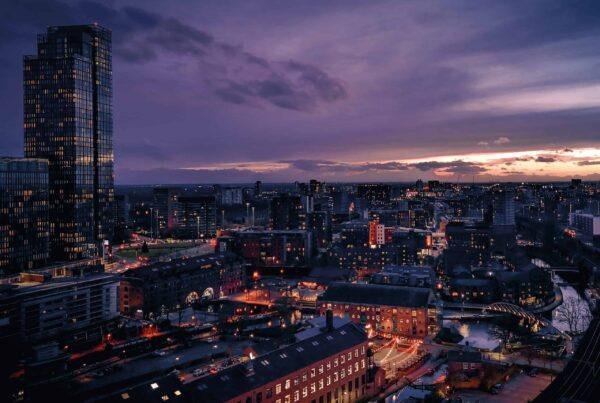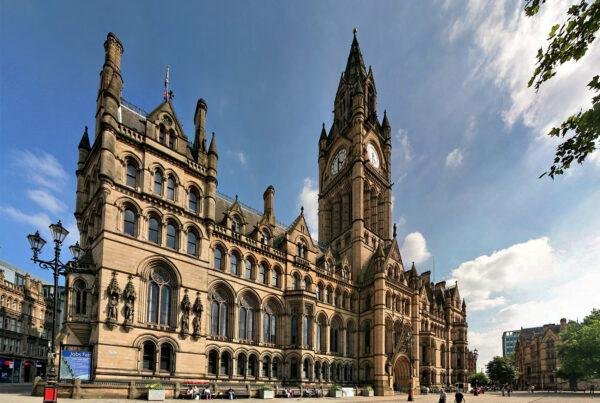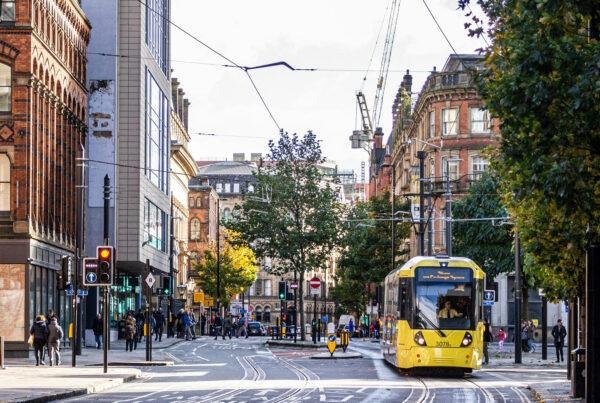

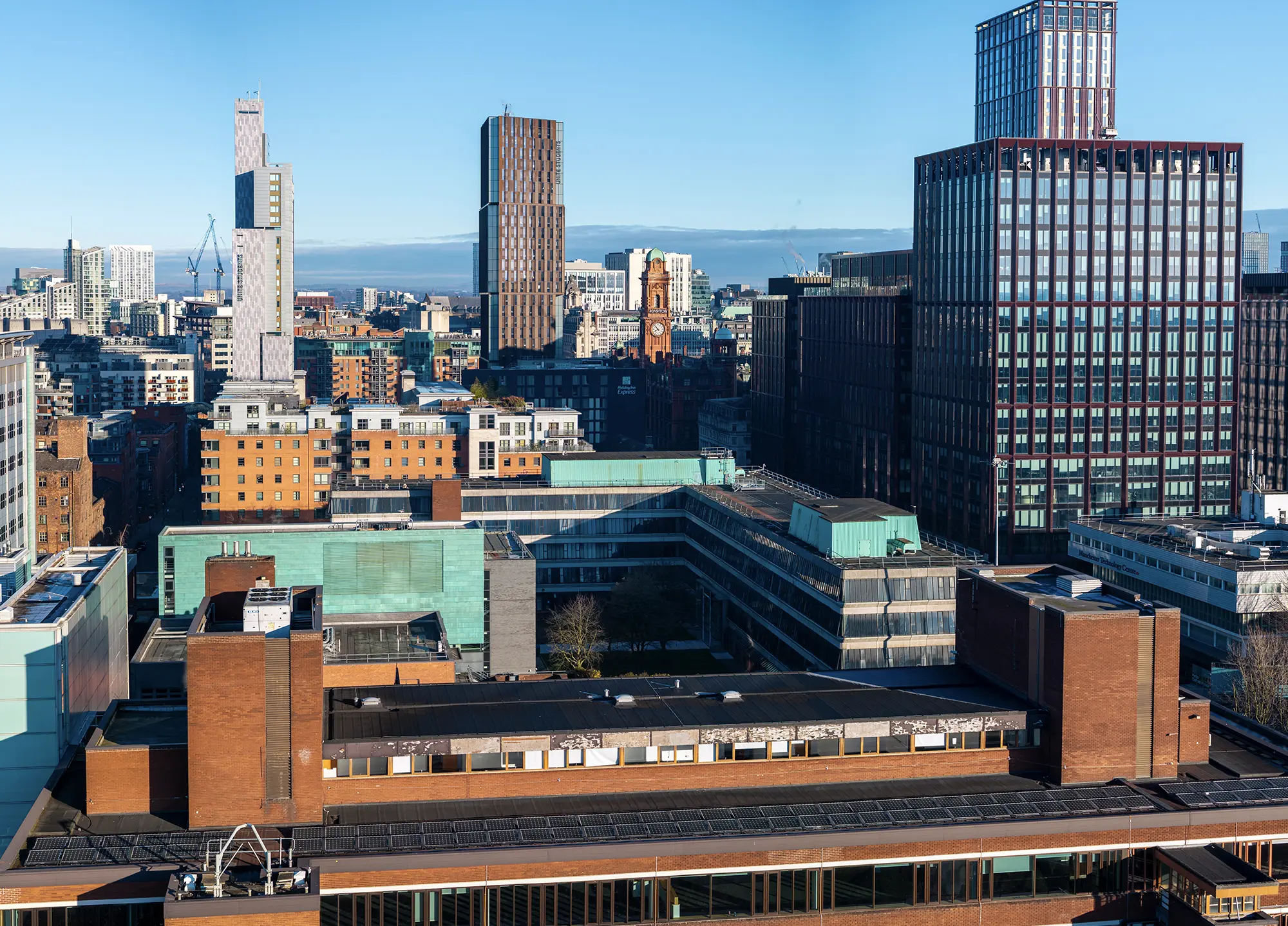
Anyone who lives or works in the Oxford Road Corridor probably already knows what a cultural hub it is in the city, the country, and the wider world.
We say “probably” because, frankly, the sheer amount of exciting things going on every single day would be a task for anyone to keep up with.
Just consider a walk along the length of Oxford Road.
You’d go past world-class educational establishments MMU and the University of Manchester, plus groundbreaking health and research hubs Citylabs and Manchester Science Park.
You would also take in cultural hotspots like the Whitworth, Contact and RNCM, as well as green spaces All Saints Park, Symphony Park, Brunswick Park and more. And you’d only have scratched the surface.
It’s a zone that perfectly blends long-established organisations and structures with brand-new developments that have been designed and built to fulfil a need, which is exactly what a city should strive for.
As David Prior says in a Prolific North article, “It’s a cluster effect that innovation economists talk about in the same breath as Barcelona’s 22@ district or Boston’s Kendall Square.” High praise indeed.
The Circle Square development lies at the northern end of the Corridor, inside Mancunian Way, surrounded by campuses of both universities.
It has proved to be an inspired choice of location, where people feel like they’re part of the buzz that the Corridor is famous for, whether they’re living, working or entertaining themselves with friends and colleagues.
The report
Now, the qualitative allure of Corridor has been given some quantitative authority, thanks to a new report by independent consultants Ekosgen. Commissioned by the Oxford Road Corridor Partnership, this Cultural Impact Assessment uses in-depth economic analysis and sectoral data to put the area’s success in more tangible terms.
If anyone still has lingering doubts about how much of an impact this mixture of art, culture, science, business, living, and entertainment has had on the city, this report should alleviate them.
The numbers speak for themselves in terms of money, jobs and world rankings. Throw in the soft attractions like festivals, open spaces, nightlife and fine dining, and it becomes clear why people and businesses are converging here.
You can read the report in full here (PDF). Below, we’ll go over the main findings.
An economic heavyweight in the heart of Manchester
According to the report, cultural activity along the Corridor has generated 3,075 full-time jobs and £219 million in annual economic output. That all has a ripple effect on the city and region, but at its epicentre is this incredible square mile that attracts 4.7 million visitors a year.
The North’s biggest creative hub
More than 7,500 students study creative arts subjects in the Corridor. That makes it the largest concentration outside London, and since many of them will choose to continue living in the city, it’s a huge boost to a local economy that relies on creative, media and digital jobs.
In fact, the Oxford Road Corridor alone accounts for 7,670 creative industries jobs, representing 24% of Manchester’s total creative jobs and 12% of the whole of Greater Manchester’s – yes, in one square mile.
Serious capital investment
Over £200 million in capital investment has been poured into the Corridor. The results are there for everyone to see, in the shape of HOME, Contact, Elizabeth Gaskell’s House, the RNCM, Manchester Museum and Whitworth Art Gallery.
These are places that have been the beating heart of Manchester’s cultural life for generations (HOME is what became of the beloved Cornerhouse, and is now located in the First Street development five minutes along Whitworth Street). Now their foundations have been strengthened with serious investment that is allowing them to look forwards.
Festivals galore
Every year, the Corridor hosts no fewer than 75 days’ worth of festivals in all the arts, spread across 37 venues.
That includes major events like Manchester Literature Festival, Psych Fest, Punk Festival, Animation Festival, Jazz Festival, Horizons Festival and Histories Festival. The Psych Fest alone is estimated to generate a million pounds’ in economic impact every year. And this is just part of the 12,900 events and performances hosted in the zone, attracting 1.9 million visitors.
World-leading arts research
Manchester School of Arts research hubs were ranked 2nd in the UK for research power in the 2021 Research Excellence Framework.
There are five hubs studying art, performance, design, architecture, fashion and media studies, each one playing a unique part in understanding the various disciplines. There’s also a wealth of interdisciplinary research covering such diverse subjects as AI, music, wellbeing and community cohesion.
Inclusion and access
Equity is a recurring theme along the corridor. A good example is HOME Arches, which reserves 50% of its free studio and rehearsal space for artists from underrepresented groups. That includes members of the Global Majority, d/Deaf and disabled artists, and those from lower socio-economic backgrounds.
It’s impossible to overstate how important this is to a city like Manchester. Making sure people know that developments like Oxford Road Corridor are for everyone promotes a sense of community and belonging, and helps unearth talent that can easily be overlooked when a place looks and feels exclusively for others. And that feeds back into further success, development and prosperity.
Why Oxford Road Corridor matters
Mancunians don’t have to cast their minds back too far to recall a gridlocked space that they’d crawl through (or, if possible, try to avoid) on their way to somewhere else. But two decades of active development can truly transform a city zone. This relatively small area has made itself into a destination, rather than a mere spoke of the wider Manchester wheel.
Bringing residents back and placing them right among workplaces, study areas, and entertainment venues gives the Corridor a real sense of community. There’s a noticeable shift in tone as day turns to night, weekday to weekend, and that gives texture to life here.
We’re absolutely delighted to be a part of this thriving square mile, where there’s always something exciting about to happen, where coffee tables buzz with talk about events and discoveries that will go on to change the way people live.
Select Property’s Circle Square development sits at the heart of this thriving corridor. With up to 7.5% achieved yields, it is one of Manchester’s most compelling investment opportunities. Contact our team today to find out more.