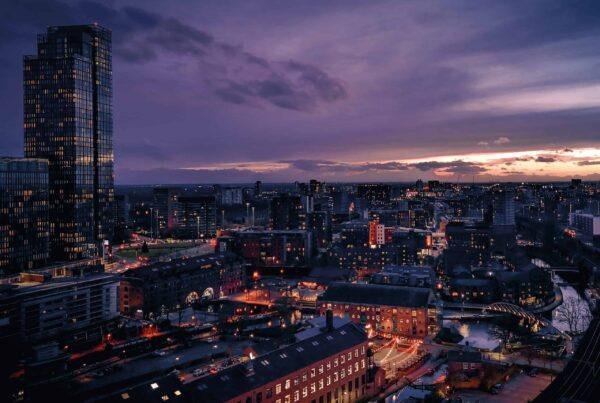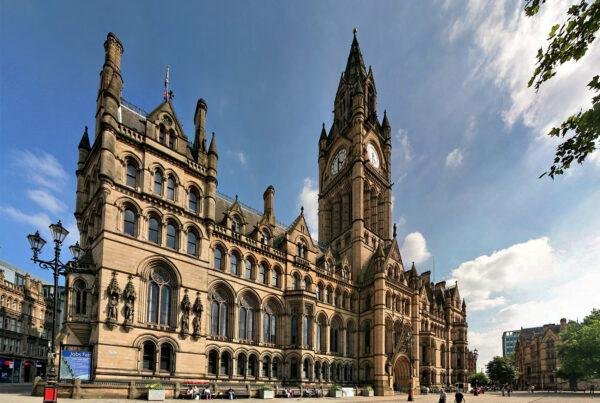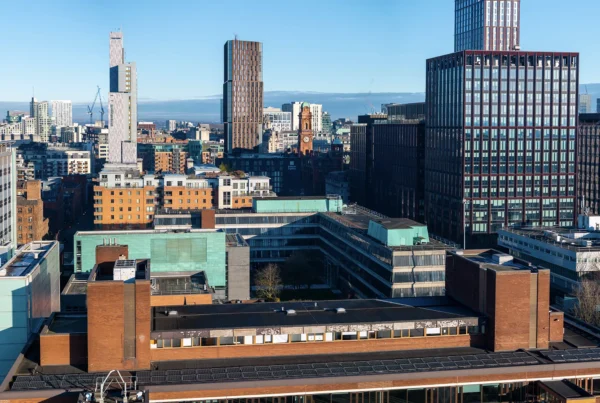

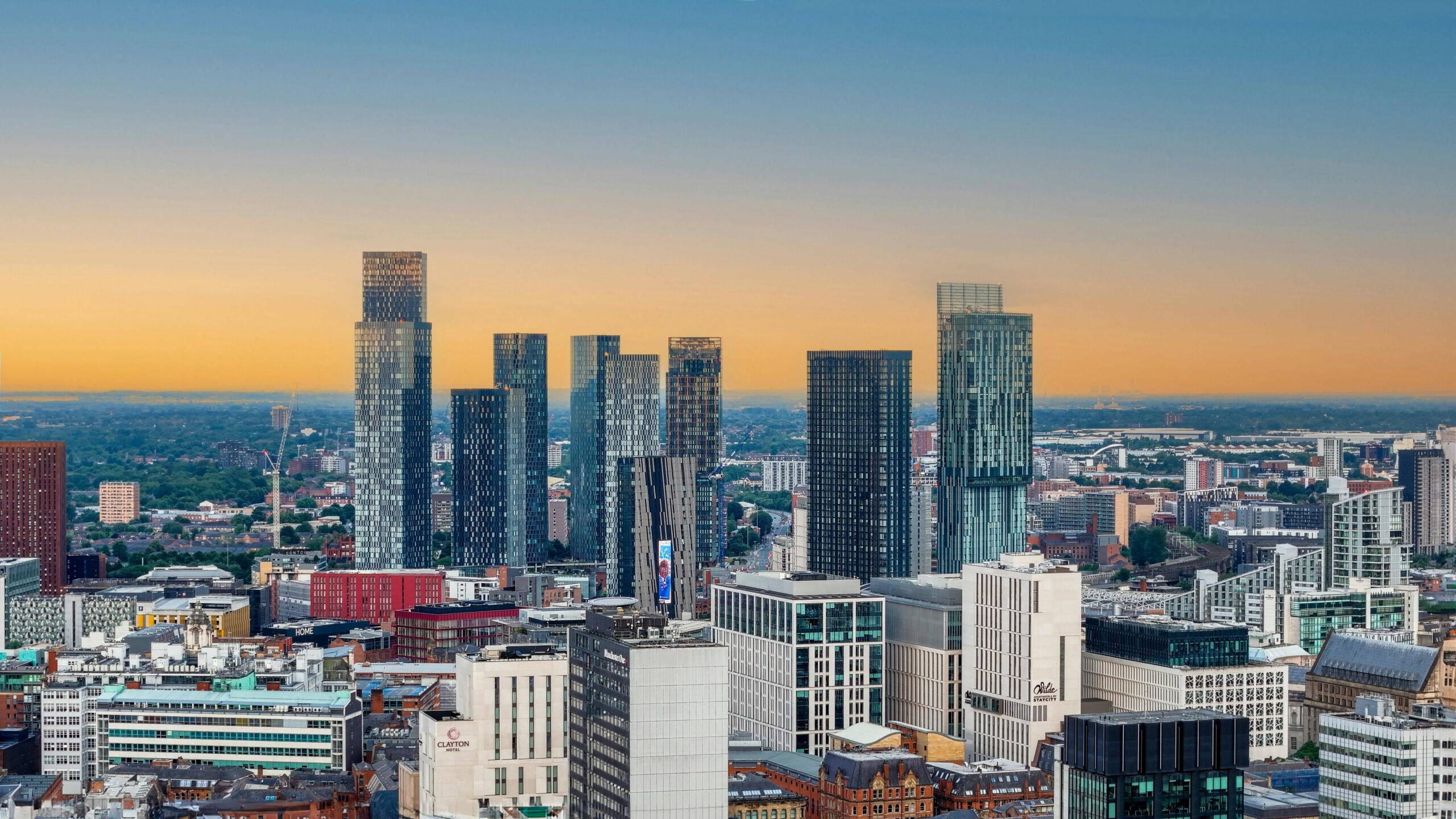
It’s hard not to be impressed by the number of exciting projects going on in Manchester, because frankly, there’s so much of it. It’s fair to say that the city had a real renaissance in the 1990s, then spent some time bedding in and consolidating. But that has meant an influx of forward-thinking people and, inevitably, investment.
Now, the city is reaping the rewards, becoming one of Europe’s most vibrant cities, with a renewed optimism that you can feel in the air. Put simply, it’s a place where people want to live, learn, bring up families and entertain themselves – and it’s only getting better. We thought it would be useful to summarise the things happening in 2026 and beyond. It all adds up to a thriving city that’s about to become even more vibrant, so if you’re looking to resettle or for your next property investment, the case for Manchester has to move it to the top of your list.
The property picture
Manchester has seen strong growth in property values for a few decades now, but the big shift has been towards city centre living. While the leafy suburbs like Didsbury and Chorlton have long attracted innovators, they now have some genuine competition across the rapidly growing skyline of the city. Luxury apartments and multi-purpose projects are springing up everywhere, mirroring other successful global cities and bringing new energy into the days and nights of the city.
Property prices in Manchester are as much as 50% lower than similar places in London, and that fact alone is leading to the city growing. People looking for good quality jobs and world class universities would rather spend their spare cash on living, not mortgages, and there’s plenty of living to be done in Manchester.
Property prices are however rising strongly, with the average property growth in Manchester predicted at 24.6% over the next five years, compared to a UK average of 19.9%. That does inject a little urgency into the property market, but with all the investment going on in the city, it’s hard to see how valuations can fall in the medium term.
Manchester is also helped by some highly successful regeneration projects that have been going on over the past decade. Areas like Ancoats, New Islington, Levenshulme and Hulme have all seen serious investment, attracting boutique businesses and creating thriving communities in safe, clean parts of the city. It seems almost strange to recall that not so long ago, the number of people actually living in the city centre zone was tiny compared to many other cities, but those days are over. According to a Rothmore report, “Manchester’s population has risen by about 23% since 2011 and is expected to reach around 635,000 in 2026 with strong graduate retention.”
The big projects reshaping the city
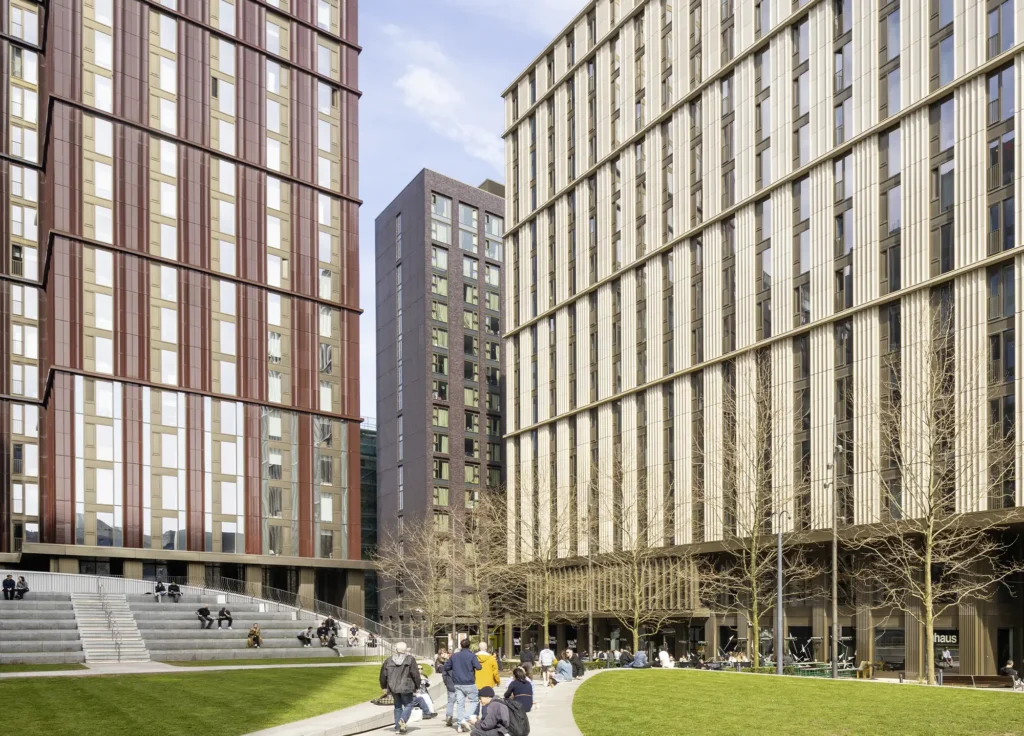
Manchester continues to invest in its people with major projects all around the city. Piece by piece, it is modernising and making strides in creating places where families and young people want to live, aided by the ever-growing Bee Network, a long-awaited revolution in public transport. It covers the whole of Greater Manchester, and moves millions of people around the metropolis on trams and buses – with full rail integration expected to start at the end of 2026. It’ll see an end to complex ticketing and journey planning in the area, and hopefully get cars off the roads to improve pedestrianisation across the city centre.
The Victoria North (Collyhurst and Red Bank) development in the north of Manchester is expected to deliver 15,000 new homes, revitalising an area that had remained unchanged for years. There are also major projects going on in the eastern corridor around Holt Town and Eastlands (around the Etihad Campus).
Something big is sure to happen around the other major sporting venue, Old Trafford, which looks likely to include a brand new stadium for Manchester United, alongside living and business spaces. Staying in Trafford, Stretford is also being transformed, with a new pedestrianised town centre gradually replacing the mall that has stood there since the 1960s.
The prize for the development with the coolest name must surely go to Atom Valley, however. It’s a tech development hub in the middle of a triangle formed by Rochdale, Oldham and Bury, with three sites combining to make up 17 million square feet (650,000 square metres) of space. It will join the Sister development right next to Circle Square on the old UMIST site, and MIX Manchester, near the airport, both of which promise innovation, research, laboratory and light industrial space.
Global names are choosing Manchester
Manchester has attracted more foreign direct investment than any other UK regional city over the last decade. And it’s not confined to a handful of sectors. Tech companies like IBM and Amazon have successfully installed themselves here, but we have also welcomed biotech leaders QIAGEN and financial services company BNY to the city – and there are many more to come. Insurance giant Canopius has opened a permanent office in Circle Square, and the vet pharmaceutical company Dechra is also relocating here.
As we reported recently, the Oxford Road Corridor alone generates up to £5bn each year, anchored by the universities and a £1.7bn investment into the Sister innovation district. Restricting much of the road to public transport during the day has breathed new life into the corridor, with businesses, restaurants and shops emerging like never before.
Education and talent
Greater Manchester hosts more than 100,000 students across the University of Manchester, Manchester Metropolitan University and the University of Salford. That leads to over 36,000 graduates each year, and where do they choose to live after graduating? You guessed it – Greater Manchester. Over 51% of the three universities’ alumni carry on living in the city, which is a huge number considering the number of international students and those from every corner of the UK.
Some will found their own businesses, while others are snapped up by employers seeking graduate talent in their sectors. It’s a process that should feed back on itself and cause ongoing growth, and that is exactly what is happening in Manchester. It’s encouraging businesses to set up shop here, and then continue to expand, as the flow of motivated talent lets them pick and choose from the best of the best.
The UK’s cultural capital?
Sure, most cities can claim to have had an impact on the UK’s cultural history, but to keep on delivering decade after decade takes some doing – and Manchester has certainly delivered. Whatever field of culture you want to nominate, it won’t be long before the conversation turns to Manchester.
The music and clubbing scene has been legendary for so long that today’s graduates are telling tales about their parents’ youthful exploits in the city clubs and venues. And, with Manchester having hosted the BRIT Awards in 2026, this makes The Co-op Live the first venue to host the ceremony outside of London. The city is also home to Manchester International Festival and Parklife at Heaton Park, two major cultural draws.
Creativity isn’t just about the BPM and chart success – Manchester is also home to the Hallé symphony orchestra, and the BBC Philharmonic is based in MediaCityUK, helped by a stream of talent from the Royal Northern College of Music based on Oxford Road. You’re never far from a theatre, art gallery or public installation, either, because self-expression is just a part of life in Manchester.
And what about sports? Does Manchester have anything culturally significant to offer? You already know the answer to that one.
What this means for the Manchester market in 2026
All of the above paints a picture of a city where there’s no shortage of developments and an embedded sense of history in every street. But does that necessarily make it a place for sound investment in 2026? The answer is surely yes. Confidence has never been an issue for Mancunians, and it might even border on swagger from time to time. But they’ve got plenty to be confident about.
The projects that we’ve covered above are a result of the confidence that public and private investors place in the region. But they also make the city somewhere to put down roots and thrive. People who set up their businesses here or expand into the city know that first, there’s a ready supply of graduates and entrepreneurs to go into employment or partner with. But even that would be insufficient were it not a place that people actually want to live. When it comes to schools, universities, parks, shopping, entertainment, arts, dining and sports, what more could you ask for in a city?
Billions of pounds in investment say that people are confident that Manchester is on the up and up. It’s regenerating its regions to bring optimism to places that lost out at the end of the city’s industrial age, introducing tech and innovation companies that will map out the next hundred years of Manchester’s story. People are moving into the city in their thousands, to experience quality apartments with modern, exciting amenities on their doorsteps.
Without doubt, it’s a city on the move, and the direction is forwards. There’s a cycle of education, investment, entertainment and people choosing Manchester as their home that shows no sign of breaking.
Contact our Vita Living Circle Square team for more information about the incredible apartments we have available, and how you can get started with an investment property in Manchester.
You can also view our full range of locations and investment opportunities at Select Property.